ABOUT TMG
What THERON MAGNETIC GENERATORS mean for the American new frontier right now, July 2026.
True, frictionless “permanent magnetic energy” would revolutionize the energy and cooling crises of AI data centers. By generating infinite mechanical or electrical energy without fuel or emissions, it could fully power facilities off-grid and drive highly efficient, near-zero-water cooling systems.
⚡ Implications for Data Center Energy
Modern AI infrastructure consumes massive amounts of power, with cooling accounting for 30% to 40% of a facility’s total electricity demand.
- Off-grid Independence: If magnets could constantly produce electricity without relying on fossil fuels or nuclear generation, data centers could bypass overloaded local electrical grids entirely, eliminating massive carbon footprints.
- Cost Reduction: It would drastically reduce operational expenses and lower global power sector strain, as data center energy consumption is projected to reach unprecedented, country-scale levels.
💧 Implications for Water Needs
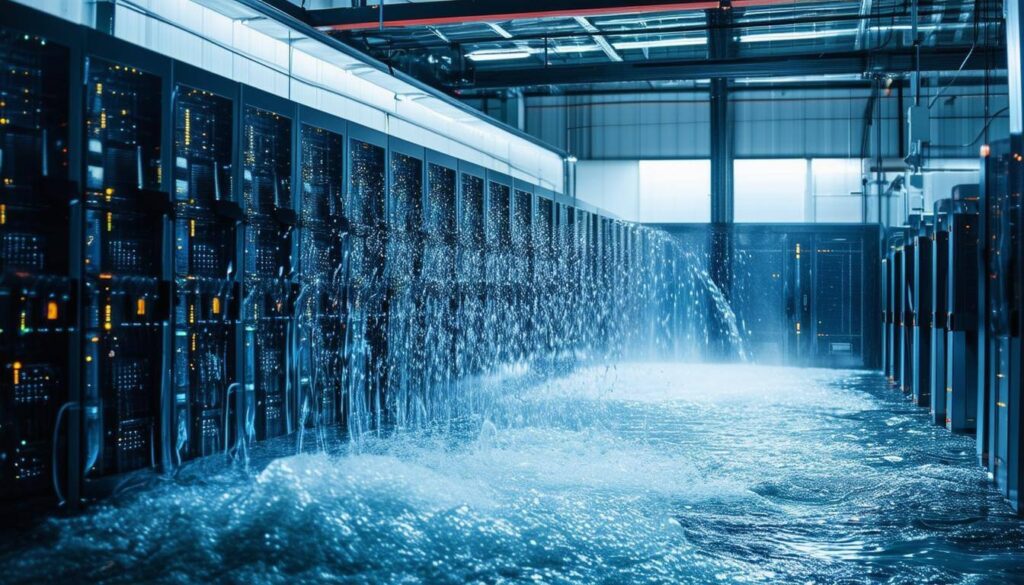
AI servers run incredibly hot and require vast amounts of freshwater—up to 5 million gallons a day for massive hyperscale facilities—to dissipate heat through evaporative cooling. Permanent magnetic energy would address this crisis in two key ways:
- Zero-Water Cooling: Powering the servers off permanent magnets removes the need for indirect water consumption caused by fossil-fuel power plants. Furthermore, boundless energy could run heavy-duty closed-loop chilling systems or advanced liquid cooling solutions without worrying about the electricity cost, bringing direct onsite water usage near zero.
- Magnetic Refrigeration: Abundant magnetic energy could power magnetocaloric cooling—a technology that uses magnetic fields to change temperatures without environmentally harmful liquid refrigerants or water evaporation.
How Recently passed Laws and Regulations affect and benefit AI Data Centers:
The integration of permanent magnetic energy (specifically via permanent magnet technologies and magnetic energy storage) is currently defining the efficiency and sustainability of AI data centers. Recent laws passed or proposed in 2025 and 2026 focus heavily on fast-tracking the energy infrastructure these centers need while attempting to regulate their massive consumption of power and water. [1]
1. Meaning of “Permanent Magnetic Energy” for AI Data Centers & Water
In the context of today’s AI infrastructure, “permanent magnetic energy” refers to the critical use of permanent magnets and magnetic energy storage to drive efficiency and manage power reliability. It does not refer to a primary power generation source (like solar or nuclear), but rather the technology that allows data centers to function at high density. [1, 2, 3, 4]
- Critical Infrastructure Role: Permanent magnets are described as the “unsung hero” of AI data centers. They are essential components in:
- Cooling Systems: They drive the high-efficiency motors in fans and pumps required to cool dense server racks.
- Power Delivery: They are the core of transformers and inductors that convert and condition power for AI chips.
- Robotics: As AI moves into embodied systems (robots), rare earth magnets are required for actuators and servo motors. [1, 2, 3]
- Energy Storage (SMES): Recent reviews identify Superconducting Magnetic Energy Storage (SMES) as a highly suitable technology for AI data centers. SMES stores energy in a magnetic field, allowing for rapid release to smooth out the massive power spikes typical of AI workload training, ensuring reliability without stressing the grid. [1, 2, 3, 4, 5]
- Impact on Water Needs: The link to water is cooling. AI data centers currently consume massive amounts of water (up to 5 million gallons daily for large facilities) for evaporative cooling.
- Permanent magnet motors enable more efficient air and liquid cooling pumps, which is the primary method to reduce reliance on water-heavy evaporative cooling.
- Companies like Nvidia are moving toward “hotter-running” chips that rely less on on-site water and more on closed-loop liquid cooling systems driven by these magnetic components. [1, 2, 3, 4, 5]
- Critical Infrastructure Role: Permanent magnets are described as the “unsung hero” of AI data centers. They are essential components in:
2. Recent Legislation (2025–2026) Supporting AI Data Centers [1]
Laws & Actions to Support/Benefit Data Centers (Fast-Tracking)
- US Executive Order (July 2025): President Trump issued an executive order to “rapidly and efficiently build out data center infrastructure.”
- The DATA Act of 2026 (Proposed – Jan 2026): Introduced by Senator Tom Cotton, this bill seeks to allow data centers to bypass federal electricity regulations (FERC oversight) if they build their own “off-grid” power infrastructure.
- EU Digitalisation of Energy Action (2026): The European Commission presented measures to integrate AI into the energy grid, promoting “demand-side flexibility” where data centers can lower costs by shifting consumption to off-peak hours. [1]
- US Executive Order (July 2025): President Trump issued an executive order to “rapidly and efficiently build out data center infrastructure.”
Laws to Regulate & Mandate Efficiency (The “Cost” of Benefit)
- EU Energy Efficiency Directive (Reporting started May 2024/2025): Requires data centers to report detailed data on energy and water usage. By July 1, 2026, new data centers in Germany (under the associated German Energy Efficiency Act) must meet strict Power Usage Effectiveness (PUE) targets (starting at 1.5, dropping to 1.3 by 2030). [1, 2, 3, 4]
- Grid Upgrade Cost-Sharing Bills (US, June 2026): New legislation proposed in the US Congress would require tech companies to pay the full cost of new power generation and transmission lines needed for their facilities, preventing these costs from being passed to regular ratepayers. [1]
- Moratoriums (2026): In response to resource strain:
- New York State legislature passed a one-year moratorium on certain crypto/AI mining operations in June 2026 (awaiting governor signature).
- Federal Proposals: The “Artificial Intelligence Data Center Moratorium Act” (introduced March/June 2026 by Sanders/Ocasio-Cortez) proposes halting new data centers until strict environmental safeguards are passed, though this has not yet become law. [1, 2, 3]