JULY 06, 2026 CURRENT LAWS
IN FAVOR OF AI DATA CENTERS
Private Electricity
Consumer Regulated Electric Utility (CREU)
With new Energy laws like RPP or EaaS or the DEOs Genesis Mission and AI help solving Americas Energy problems, our future is eluminated
DATA ACT (USA)
Key ENERGY LAWS in 2025–2026 include:
- Federal Deregulation: The DOE is cutting 47 regulations to lower costs and boost energy independence.
- BtM/DERs Optimization: New policies promote using BTM, such as rooftop solar and storage, to support grid reliability.
- Decentralized Power (DATA Act): Introduced in Jan 2026, the legislation allows manufacturers and data centers to build isolated energy systems outside of federal Federal Energy Regulatory Commission (FERC) oversight.
- Virtual Power Plants (VPPs): Increased support for integrating DERs, such as EVs and smart buildings, into VPPs to balance grid demand.
- Energy Storage Mandates: State-level legislation, such as in Oregon and Virginia, has made it easier to permit and site grid-connected storage.
- AI and Tech Regulation: Beyond energy, new laws are regulating AI-created content and deepfakes.
These regulations aim to reduce reliance on centralized power, encourage private investment in energy infrastructure, and utilize AI-driven control for demand flexibility.
The DATA Act of 2026 will eliminate outdated federal regulations and enable manufacturers, data centers, and other energy-intensive industries to build customized electricity systems without impacting existing power grids.
⚖️ OWN ENERGY.
Distributed Energy Resources (DERs)
The 2026 electricity landscape prioritizes technical authority and financial outcomes, including learning the technical electrical jargon.
Consumer Regulated Electric Utility (CREU): This is the emerging legal designation for private entities that generate and distribute power independently of traditional public utilities.
Behind-the-Meter (BTM) Generation: Use this to describe any system that generates power on the user’s side of the utility meter, essentially making the main grid a “backup” rather than the primary source.
Grid Arbitrage: This is the practice of avoiding high utility “peak” rates by using your own stored or generated power when grid prices spike.
Energy-as-a-Service (EaaS): A business model where you sell the service of electricity through a contract, rather than just the hardware.
Islanding / Physically Islanded: The technical ability for a property to disconnect from the main grid and operate autonomously—a major selling point for “private electricity”.
⚖️ Navigating USA Rules & Laws
To legally “be your own utility,” you need to follow a multi-layered regulatory framework.
1. The Federal Framework (FERC)
FERC Order No. 2222: This landmark rule mandates that regional grid operators allow small-scale Distributed Energy Resources (DERs)—such as Theron Gensets—to compete in wholesale energy markets.
Qualifying Facilities (QFs): Under the PURPA law, if your system is small and efficient, traditional utilities are often required to buy your excess power at “avoided cost” rates.
2. State-Specific Rules (Example: Florida)
Florida Solar Rights Act (FSRA 163.04): Protects the right of homeowners and HOAs to install renewable and energy-saving structures, prohibiting bans by local governments or HOAs.
Net Metering Step-Down: As of 2026, Florida’s net metering credits for selling back to the grid have dropped (e.g., to 60% in 2026), making Behind-the-Meter consumption much more profitable than selling back to the utility.
CREU Legislation: Newer 2026 policies allow Consumer Regulated Electric Utilities to operate independently for non-residential loads (data centers, industrial sites) with limited oversight from state utility commissions.
3. Residential Submetering & Resale
If you plan to charge residents “whatever rates you decide,” you must be careful:
Rate Limits: Many states (like Florida) require that, if you resell electricity to tenants or residents, the rate cannot exceed the local utility’s rate.
Power Purchase Agreements (PPAs): To avoid being regulated as a “Public Utility,” most private providers use a PPA, where the resident pays for the service of the electricity generated on-site rather than a simple per-kWh retail sale.
✍ Information becoming your own electricity supplier
| The WHY? | Proposed “Authority” |
| “Become your own utility company!” | “Establish a Consumer Regulated Electric Utility (CREU) for Property Sovereignty.” |
| “Charge your customers whatever monthly rates you decide.” | “Monetize your on-site generation through Power Purchase Agreements (PPAs) and Energy-as-a-Service revenue models.” |
| “Do you live in a homeowners association?” | “Empower your HOA with a Physically Islanded Microgrid to eliminate grid-dependency and utility rate hikes.” |
| “Invest in one of our generators.” | “Deploy Theron Distributed Energy Resources (DERs) to capitalize on Grid Arbitrage and BTM efficiency.” |
⚖️ Laws & Rules to Adhere To (USA)
Navigating the U.S. energy landscape requires knowing who “owns” the rules. It is a mix of federal and state authority.
1. Federal Level (FERC)
The Federal Energy Regulatory Commission (FERC) governs wholesale markets.
FERC Order No. 2222: This is your best friend. It allows small-scale DERs to compete in regional energy markets. If your equipment is “FERC 2222 compliant,” you’re telling the world it can actually make money by helping the grid.
PURPA (Public Utility Regulatory Policies Act): This law requires traditional utilities to buy power from “Qualifying Facilities” (QFs) at an “avoided cost” rate.
2. State Level (PUCs/PSCs)
Each state has a Public Utility Commission.
Retail Sales Prohibitions: In many states, you cannot technically “sell” electricity by the kilowatt-hour (kWh) to a neighbor unless you are a registered utility.
The Workaround: Many private providers use a Power Purchase Agreement (PPA) or incorporate the energy cost into a “facilities fee” or “lease amenity” to avoid being classified as a regulated utility.
3. Interconnection Standards
Even if you are “private,” if you touch the grid, you must follow IEEE 1547 standards. This ensures your system doesn’t “backfeed” and injure utility workers during an outage.
✍️ Why Private Electricity
Instead of “Paying your Energy Bill FOR LIFE with your monopoly utility company,” try these more “B2B” and “Prosumer” energy options instead:
“Master Your Energy Sovereignty with Behind-the-Meter Innovation.”
“Deploy a Private Microgrid: Decouple from Volatile Utility Rates.”
“Turn Your Property into a Revenue Stream via Grid Arbitrage and BTM Generation.”
- “Create generational wealth for your family.”
A Quick Comparison for Your Users
| Feature | Traditional Utility | Theron Private Electricity |
| Control | External / Monopoly | Internal / Sovereign |
| Pricing | Subject to Rate Hikes | Fixed / Owner-Defined |
| Resiliency | Vulnerable to Grid Failure | Islanding Capable |
Ratepayer Protection Pledge (White House Proclamation)
Enacted March 4, 2026. This federal proclamation mandates that artificial intelligence hyperscalers and data center developers must absorb 100% of the independent energy and infrastructure costs required to sustain their operations. It strictly prohibits passing these capital expenditures onto ordinary residential utility consumers.
Direct Application: This creates a massive financial incentive for tech firms to completely decouple from traditional utilities and deploy privately owned, behind-the-meter energy blocks to avoid massive utility infrastructure fees.
FERC Section 206 Large Load Integration Mandate
Issued June 18, 2026. The Federal Energy Regulatory Commission directed all regional grid operators (RTOs/ISOs) to overhaul their tariffs to accommodate high-density energy users. Crucially, the order legally enforces expedited, streamlined pathways for co-location agreements and behind-the-meter (BTM) generation.
Direct Application: Provides concrete federal legal backing that validates independent, co-located generation systems as vital infrastructure, allowing facilities serving proximate loads to deploy without waiting in standard 8-year utility grid queues.
Executive Order 14409 (Advanced AI Infrastructure & National Security)
Issued June 2, 2026. This directive prioritizes the physical and digital protection of advanced technological infrastructure, imposing strict federal security guidelines on large-scale computational deployments and data center energy supplies.
Direct Application: Reinforces that decentralized, physically islanded energy infrastructure is a matter of critical national security, shielding vital power assets from public grid vulnerabilities and centralized cyber threats.
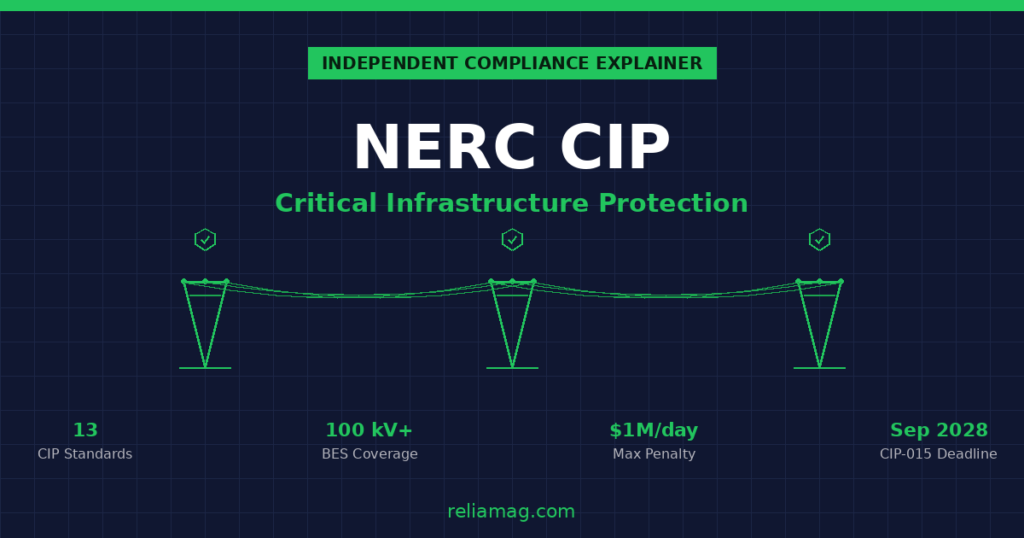
NERC CIP-014 Grid Isolation Compliance Formally addresses the strict physical and operational security standards governing public utility interconnections. By utilizing an autonomous, Physically Islanded Microgrid configuration, industrial operations and high-density data centers completely eliminate the severe regulatory liabilities, mandatory threat audits, and cascading systemic vulnerabilities associated with the public bulk power system.
Direct Application: Legally justifies total grid decoupling as the premier strategy for safeguarding critical computational and maritime infrastructure against centralized network failures.
The NERC CIP-014 Physical Security Directive (Grid Isolation Mandate)
The Mandate: North American Electric Reliability Corporation (NERC) Critical Infrastructure Protection (CIP) Standard 014.
The Blueprint: Enforces strict physical security, threat assessments, and operational resilience mandates on transmission substations and primary control centers. It penalizes facilities that introduce vulnerabilities to the public bulk power system.
Why It Matters to Your Mission: This is your strongest legal argument for “Physical Islanding.” Because traditional grid connections expose industrial operations and data centers to massive compliance liabilities and centralized cascading blackouts under CIP-014, deploying a completely decentralized, behind-the-meter power block removes them from the regulatory crosshairs entirely. It proves that operating independent of the public grid is the ultimate way to achieve national security compliance.
- R1: Risk Assessment — Transmission Owners must run grid simulations every 30 to 36 months to identify highly critical stations.
- R2: Independent Verification — An unaffiliated third party must review and verify the critical asset list.
- R3: Operational Notification — Owners must notify the regional Transmission Operator if an asset meets the critical threshold.
- R4: Vulnerability Assessment — Entities must execute a detailed Threat and Vulnerability Assessment (TVA) for verified sites.
- R5: Security Plan Development — Utilities must design a physical security plan focused on six traits: Deter, Detect, Delay, Assess, Communicate, and Respond.
- R6: Plan Verification — A second independent third-party review must validate both the TVA and the security plan.
- System Topology Adjustments: Re-routing power around a compromised hub to keep the broader grid operational.
- Controlled Islanding: Intentionally separating parts of the power system to localize a crisis and prevent a black-start scenario across the entire Interconnection.
- Component Redundancy: Deploying pre-staged spare equipment (like Mobile Substations or Large Power Transformers) to rapidly restore isolated areas.